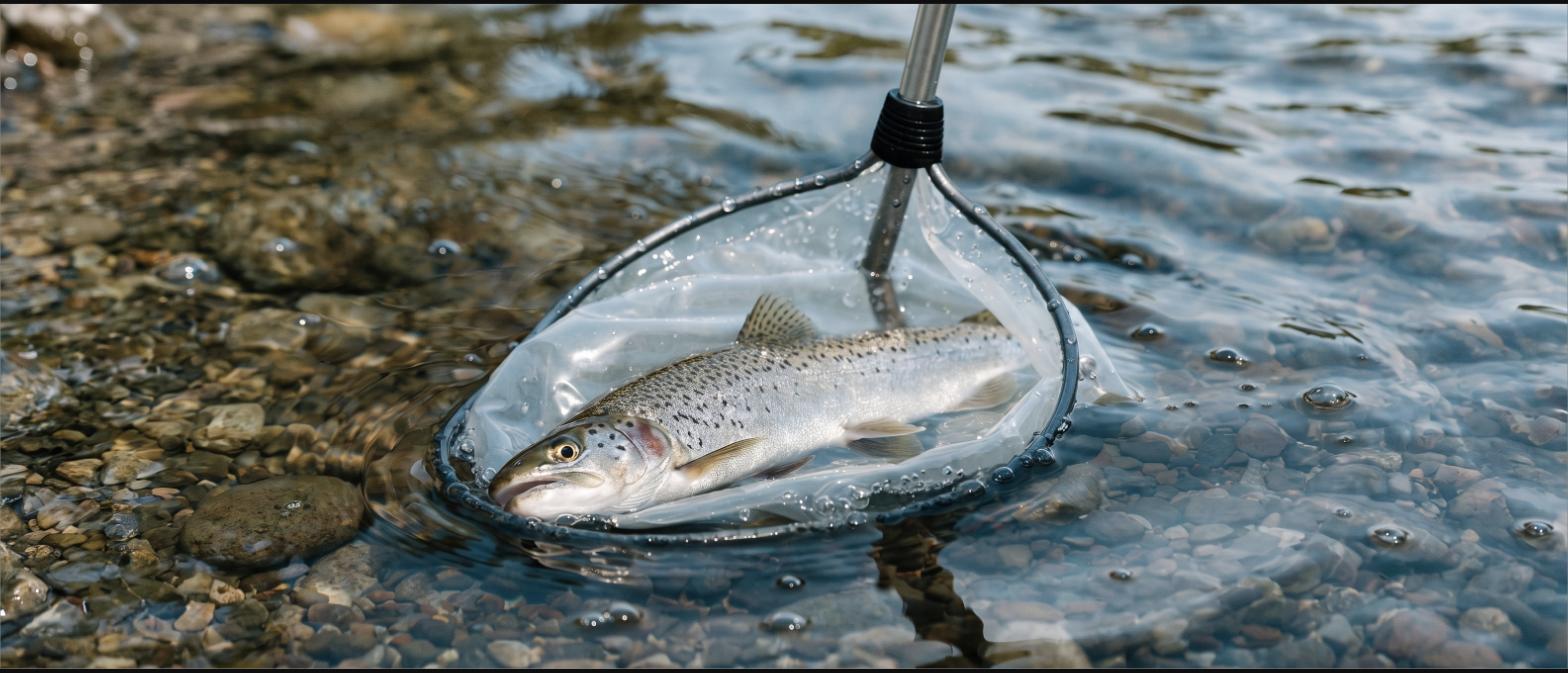
Our congregations sit in country where fishing is not a hobby so much as a way of life. Fish feed families here, and the rivers that carry them have been feeding families for a very long time. That gives a plain, practical shape to something the church has always taught: what has been entrusted to us is meant to be handed on in good condition.
A lot of that comes down to small choices in how we handle a fish. And one of the smallest is the bag on the end of your net.
What the Net Actually Does to a Fish
Every fish is covered in a thin coat of slime. It is not incidental. That layer is the fish’s defence against fungus, bacteria and parasites, and once it is rubbed off, the fish is exposed at exactly the moment it is already exhausted.
Old-fashioned knotted nylon mesh strips that slime away, and the knots themselves abrade fins and eyes. Nylon also catches hooks, which turns a quick release into two minutes of untangling with the fish out of the water. If you intend to release anything you catch, the net is doing more damage than the hook.
Why Rubber Changed That
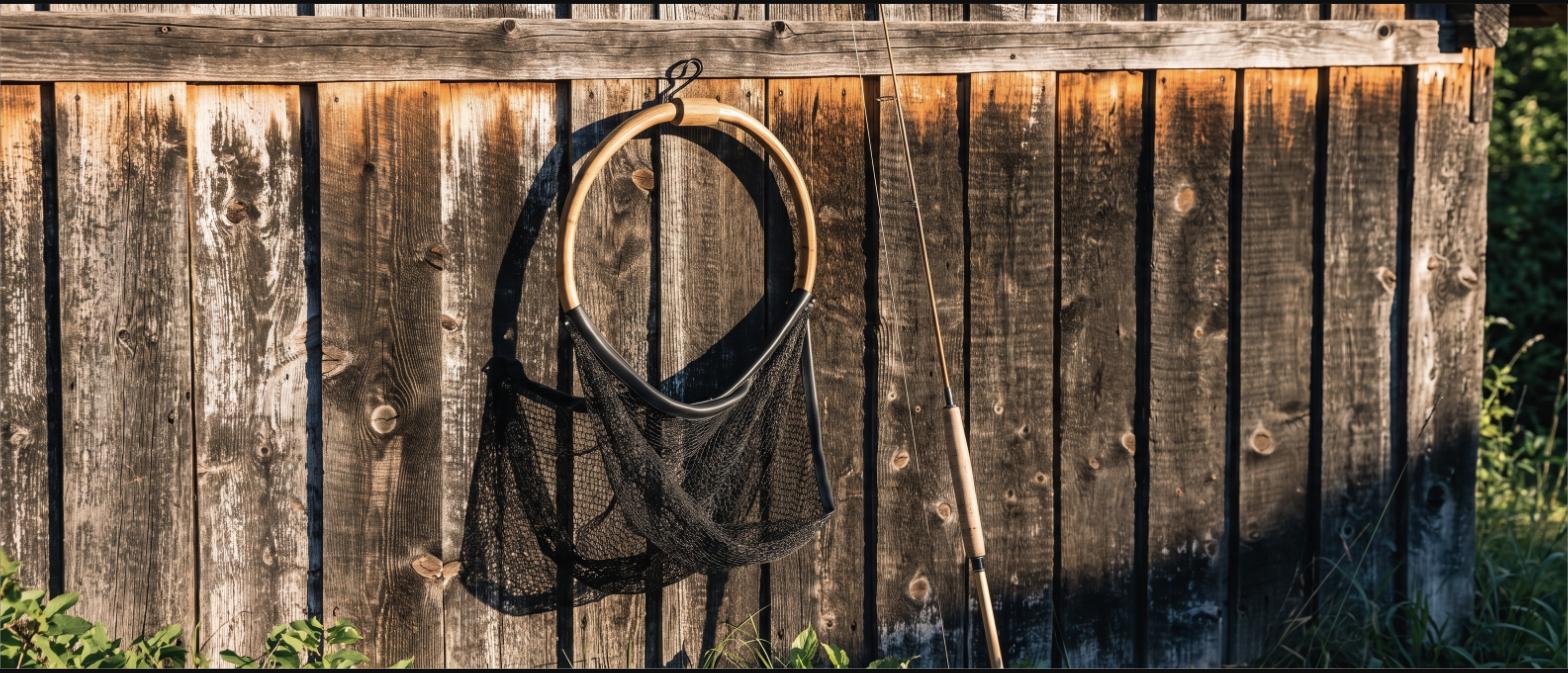
A moulded rubber or rubber-coated bag has no knots and a smooth surface, so it slides over a fish rather than scouring it. Hooks sit on top instead of weaving in, which means most releases take seconds. It also does not hold water and freeze stiff, which anyone who has fished here in October will appreciate.
The trade is weight and a little more drag in current. That is a small price. Replacement fishing net bag options let you keep a good frame and swap only the bag, which is cheaper than replacing the whole net and keeps a decent one out of the landfill.

Watch: Why Use a Rubber Landing Net? Safer Catch and Release (YouTube)
Handling It Well
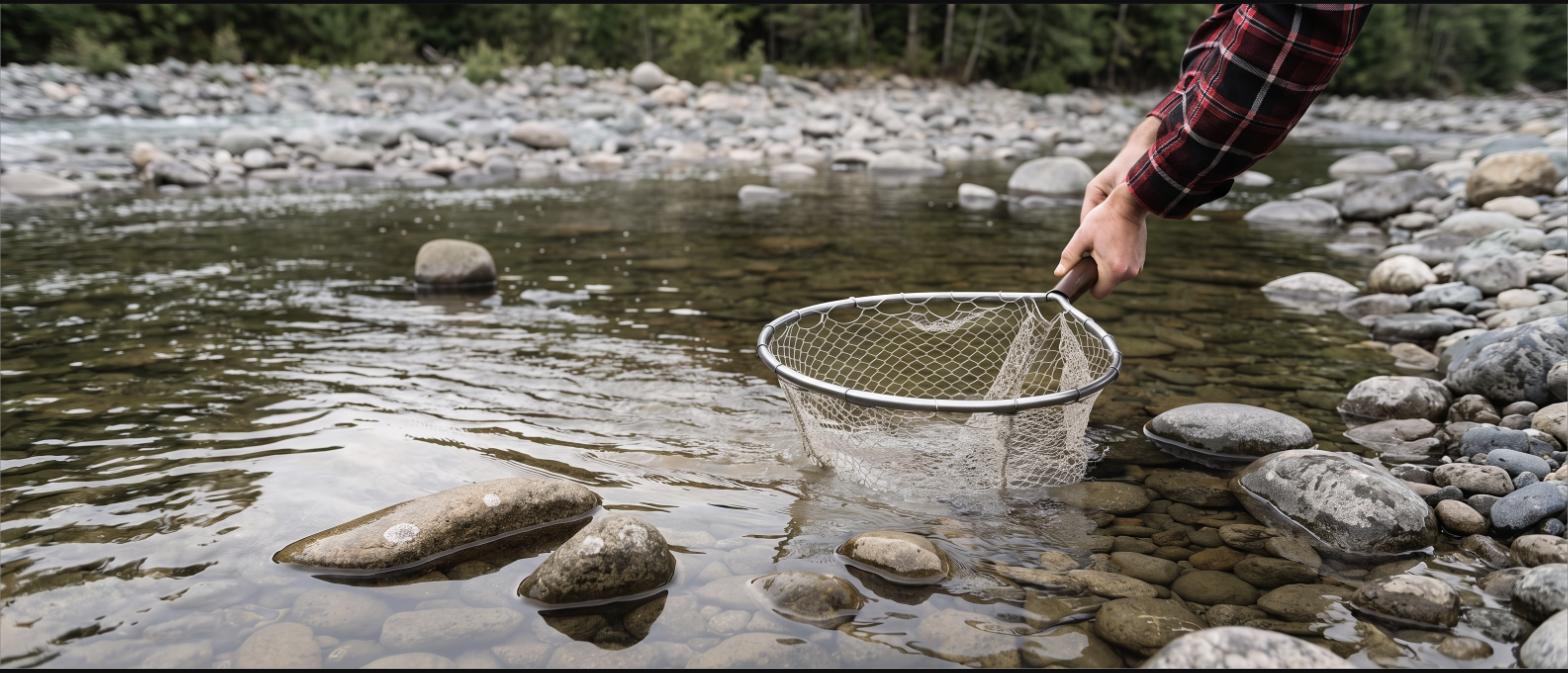
The rest is habit. Keep the net and the fish in the water while you work the hook out. Wet your hands before you touch anything. Skip the long photograph, and if you take one, hold the fish low over the water so a drop is a splash rather than a fall onto rock. Face a tired fish into the current until it swims off under its own power rather than pushing it away.
None of that costs anything. It is simply attention, which is most of what stewardship ever amounts to.
The Old Instruction
Scripture puts people in a garden and tells them to tend it, and the word carries responsibility rather than ownership. A river is no different. Whether you keep your limit for the freezer or let everything go, the fish that swims away should be in a fit state to spawn next season.
A rubber net bag is a very small piece of that. But most faithfulness is small, and it is usually about the thing you could easily have skipped.